
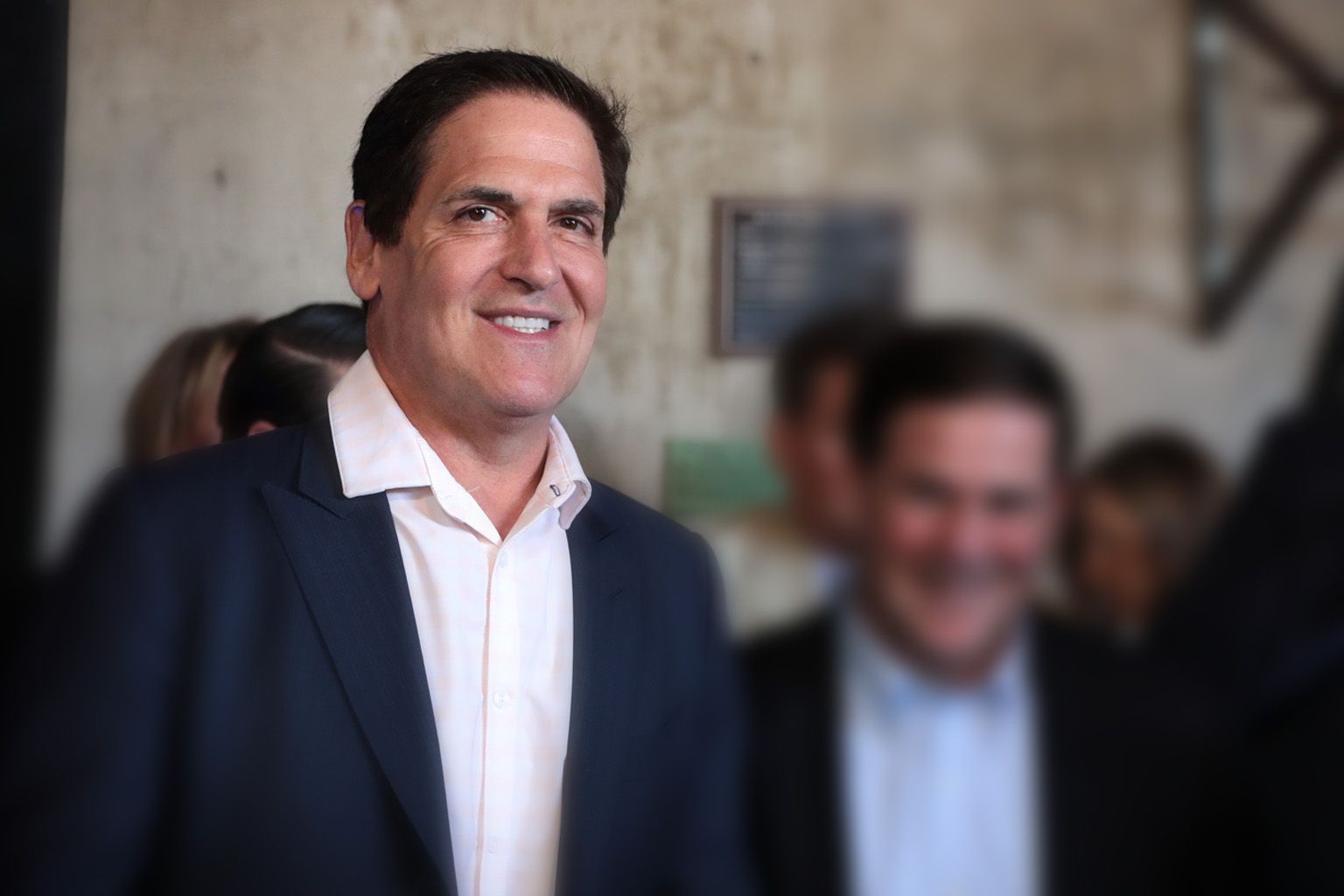
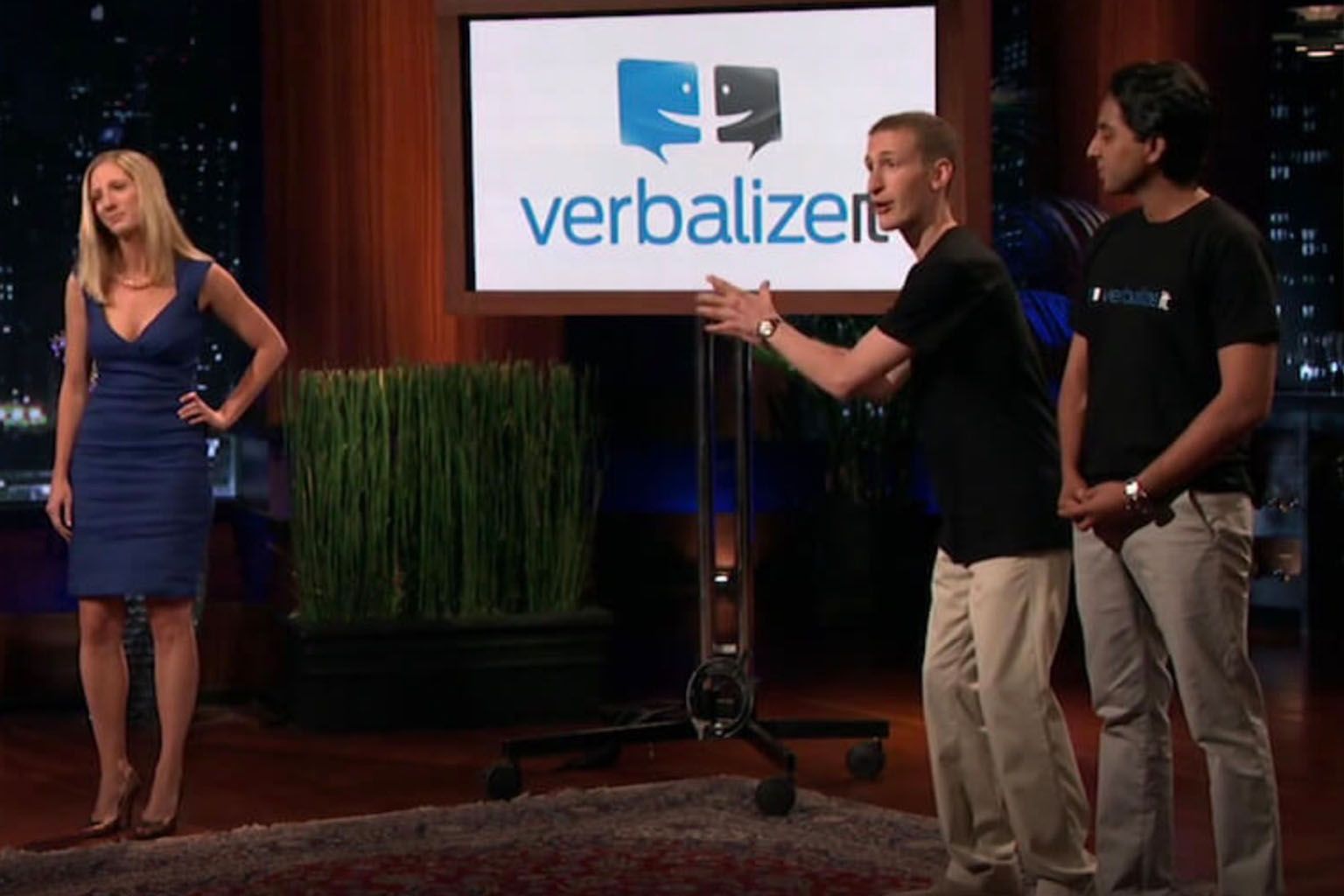
In 2013 I took my previous company on Shark Tank. To our delight, Mark Cuban wanted to invest, but with a caveat. He told me that AI was about to make most of the human expertise my business relied on either free or irrelevant. He wanted us to be at the cutting edge of where AI was going, not just where it was. I told him off-camera that he didn't understand the expertise needed in our business. We turned down his offer. Three years later "the machine" got dramatically better and I understood, with the clarity of someone who just watched a market restructure overnight, that Mark had understood my business better than I did.
What I got out of that experience - more valuable than anything else - was a front row seat to a technology transition before anyone called it AI. Before the conference panels and the vendor decks and the think pieces. I felt what it feels like when an industry measures the wrong thing right up until measuring the wrong thing becomes fatal. When everyone is confidently tracking a metric that turns out to be completely disconnected from the thing that will determine who wins.
I know what that moment looks like.
I'm watching it happen in our industry right now.
What We've Actually Built
Ask a post-acute or home care operator if they're using AI and the answer is almost always yes. Notes are faster. Documentation quality is up. Staff has tools. Leadership is being thoughtful.
Now ask if any of it has moved their intake response time. Ask if their compliance team is doing less manual chasing than eighteen months ago. Ask if the family who submitted a contact form at 9pm last Thursday heard back before the three other agencies they contacted that same night.
The answers get quiet.
Because here is what most of this industry has actually built: a faster version of the same broken process. A coordinator who writes notes in half the time is still a coordinator who has to notice the inquiry, open the file, pull together the information, decide who to call. The AI sat down next to her and made her better at her job. The job is still hers to initiate, own, and execute.
That is not transformation. That is a productivity improvement with a transformation budget.
And the gap between those two things is not closing on its own. It is widening. In your market. Right now. Not in some national aggregate statistic - in the specific zip codes where you operate, with the same referral sources you call on, competing for the same families who are Googling home care agencies tonight.
The Only Question That Matters
When something needs to happen in your organization, what starts it?
A family submits a contact form. A patient needs to be staffed. An authorization is about to expire. A compliance gap opens up. What starts the process of addressing it?
If the answer is a person a care coordinator checking her inbox in the morning, a compliance officer running the weekly report, an intake manager working through the overnight inquiries when she gets in at 8:30 you are at Level 2. AI is a tool your people use. Your people are still the operating system. And the consequence of that, which almost nobody has formally calculated, is that you are losing business to competitors you may not even know are ahead of you before your team has had their first cup of coffee.
Level 2 organizations don't lose referrals and client inquiries in dramatic, visible ways. They lose them quietly. A family chose someone else before the business day started. A discharge planner routed to a competitor because they called back first - not better, first. An authorization lapsed because nobody ran the report that week. Level 2 losses don't show up as lost business. They show up as flat growth, slightly softer referral volume, a fill rate that never quite hits where it should. Diffuse. Hard to trace. Easy to attribute to market conditions.
It is not market conditions.
If the answer is the system - the inquiry triggers an immediate response, the authorization flags itself weeks before expiry, the staffing gap surfaces without anyone looking for it - you are at Level 3 or above. Your people are managing outcomes. The system is running the process.
The distance between Level 2 and Level 3 is not a software difference. It is a business model difference. One organization is waiting for people to notice things. The other has already acted before anyone arrived at the office. In a market where families are shopping three agencies simultaneously at 9pm and discharge planners return whoever called back first, that gap is not a competitive nuance.
It is the whole game.
Karen
A woman named Karen is sitting at her kitchen table after her kids are in bed. Her father fell twice last week. She can't keep leaving work to check on him and the conversation about what comes next is one she has been putting off for six months and can't put off anymore. She Googles home care agencies in her father's zip code. She reads three websites. She fills out contact forms on all three. She closes her laptop at 9:24pm and goes to bed anxious, hoping someone calls her tomorrow.
At your agency, the form hits the inbox. It will be there when your intake coordinator arrives in the morning.
At the agency across town - not a national platform, not a private equity rollup, a local operator you've probably seen at the same association dinners - the form triggers an immediate automated response. Warm. Personal. Her father's name is in it because she put it in the form. It tells her someone will call first thing tomorrow, gives her a direct number if she needs anything tonight, and includes a short plain-language overview of what the process looks like so she can stop wondering. It arrives at 9:26pm while she's still brushing her teeth.
She wakes up Friday already feeling like she has a partner in this. She takes the meeting that agency scheduled overnight. She signs within the week.
Now do the math. An average home care client generates $50,000 to $75,000 in annual revenue. Families who find a provider they trust at the moment of peak anxiety don't shop around again for years. They refer their friends. They call when a sibling needs care. The lifetime value of Karen, in a typical home care market, is not one client. It's a relationship worth several times the first engagement.
You lost that before your intake manager opened her laptop.
Not because your care is worse. Not because your coordinators are less skilled. Because the agency across town automated the part of intake that doesn't require skill - the immediate acknowledgment, the overnight responsiveness, the first signal that someone is paying attention - and you are still depending on a person to notice the form and decide it's time to respond.
That agency is not a unicorn. They are operating in markets like yours, at sizes like yours, with the same EMR constraints and the same staffing pressures you have. They made one decision differently. And they are now compounding that decision against you every night your office is closed.
The Comfortable Mistake
The reason most operators haven't made this jump is not budget and it is not technology. Both are available. The reason is that moving from Level 2 to Level 3 is genuinely hard. It requires integrating systems that weren't built to talk to each other. It requires rebuilding workflows that your team has run on muscle memory for years. It requires asking your coordinator to trust a process she didn't design and can't fully see. That is real organizational change, and real organizational change is uncomfortable and slow and occasionally breaks things before it fixes them.
I am not dismissing that.
I am telling you that the cost of that discomfort is finite. The cost of not making the change is not.
The hybrid model - humans using AI tools - feels responsible. Feels like appropriate oversight. Feels like maintaining the personal touch and relational quality this industry is built on.
This is exactly what I said about my business on national television in front of several million people while Mark Cuban sat across from me knowing I was wrong.
The complex work still needs humans. The conversation that requires empathy and clinical judgment and the ability to hear what a scared daughter is not quite saying - that needs a human. But that conversation cannot happen if the agency never responded before the family chose someone else. The personal touch only matters if you get to the table. Level 2 organizations are losing the table. They are losing it quietly, at 9pm, to the agency down the street that automated the part of the process that didn't require a human and freed their humans for the part that does.
The hybrid protects us on the complex work. The bypass is what gets us in the room.
Run This Before Your Next Leadership Meeting
Here is the first move. Not a transformation program. Not a vendor evaluation. One hour.
Pick intake. Map every step from the moment a family inquiry arrives to the moment a human being takes a meaningful action on it. Write down what triggers each step. Count how many of those triggers are a person deciding it's time.
That number is your human initiation rate for intake. That is where the Karen story lives. That is the number the agency across town has already moved.
If you want to go wider, run the same exercise across ten operational transactions from last week - authorizations, recruiting, compliance gaps, staffing needs, anything. Count how many started because a person decided it was time versus because a system surfaced it automatically.
Whatever percentage started with a person - that is your actual AI maturity score. Not the tools you've deployed. Not the documentation metrics on the board slide. The percentage of your operation that is still waiting for someone to notice before it begins.
If it's above 80, you now know exactly what to fix and roughly what it's costing you every month.
Patient intake: what triggers each step?
A typical home care intake has 10 steps. Count how many wait for a person to start them.
1
Inquiry arrives
Web form, phone call, or referral hits your system
System
2
Inquiry is noticed
Coordinator checks inbox, sees the new form
Person
3
Initial response sent
Coordinator decides to call or email back
Person
4
Patient info gathered
Opens file, reviews needs, checks service area
Person
5
Insurance verified
Pulls up coverage, confirms eligibility
Person
6
Intake call scheduled
Coordinator finds a slot, coordinates availability
Person
7
Clinical assessment prepped
Reviews notes, flags clinical needs before call
Person
8
Intake call completed
Conducts assessment, captures care preferences
Person
9
Care plan initiated
Assigns caregivers, sets schedule
Person
10
Follow-up confirmation
Calls family to confirm start date and details
Person
Human initiation rate
90%
Run this for your own intake process. Whatever percentage is human-initiated — that's your actual AI maturity score.
What Cuban Knew That I Didn't
Mark Cuban saw, in a business he'd known for twenty minutes on a television soundstage, that the dangerous question was never whether humans were better than machines. They were, at the hard stuff. The dangerous question was whether the market would keep paying for humans on the transactions that didn't require them. And the answer to that question, once the technology crossed a threshold, came fast.
That threshold is crossed in our industry. Right now. Not approaching. Crossed.
The operators who are going to look back on 2026 the way I look back on that stage are the ones currently showing their boards an AI adoption slide, proud of their documentation metrics, certain that the people asking uncomfortable questions about transaction models don't understand the nuance of care delivery.
Those people understand care delivery fine.
What they understand, and what I wish someone had said to me clearly before 2016, is that the market doesn't reward you for being right about the ceiling if you're wrong about the floor. The floor is the routine work. The volume. The transactions that don't require judgment. The 9pm contact form. The authorization renewal. The compliance flag. The system that surfaces the gap before anyone has to look for it.
That floor is where the margin lives. That floor is where Karen chose. That floor is what the agency down the street automated while you were focused on the quality of the work that happens after you get the client.
Mark saw it coming in a business he'd known for twenty minutes.
You've been running yours for years.
The first move is an hour and a spreadsheet.
Start there.
Latest

insights
Why home healthcare’s next big wave is ‘digital labor,’ not more software
Home healthcare doesn't have a software problem, it has an administrative labor problem. Here's the right AI solution.
By Kunal Sarda · Apr 20, 2026


